The idea of booking an air taxi through Uber still sounds like something from the next decade, but 2026 is making that idea feel a lot more real. Uber and Joby are no longer talking in broad futuristic language alone. They are showing people how the service will work inside the Uber app, naming the first launch market, laying out the first routes, and pushing the product as part of a real multimodal travel experience instead of a distant concept.
That shift matters. For years, air taxis lived in the same category as many mobility promises: exciting, expensive, impressive on stage, but too far away to change how people actually move. Now the question is more serious. Is Uber Joby air taxi travel close enough that riders, investors, and drivers should already be paying attention? The answer is yes, but with a hard limit. It is closer on product experience than many people expected, but still not close enough to treat as routine everyday transportation in most markets.
If you are following how rideshare is changing from multiple directions, read our earlier posts on Uber Women Preferences in 2026, Lyft’s gas relief program in 2026, and Uber and Motional’s robotaxi launch in Las Vegas. Together, they show the same pattern: the rideshare business is becoming more personalized, more automated, and more willing to redefine what “a ride” can mean.
What Uber and Joby are actually building
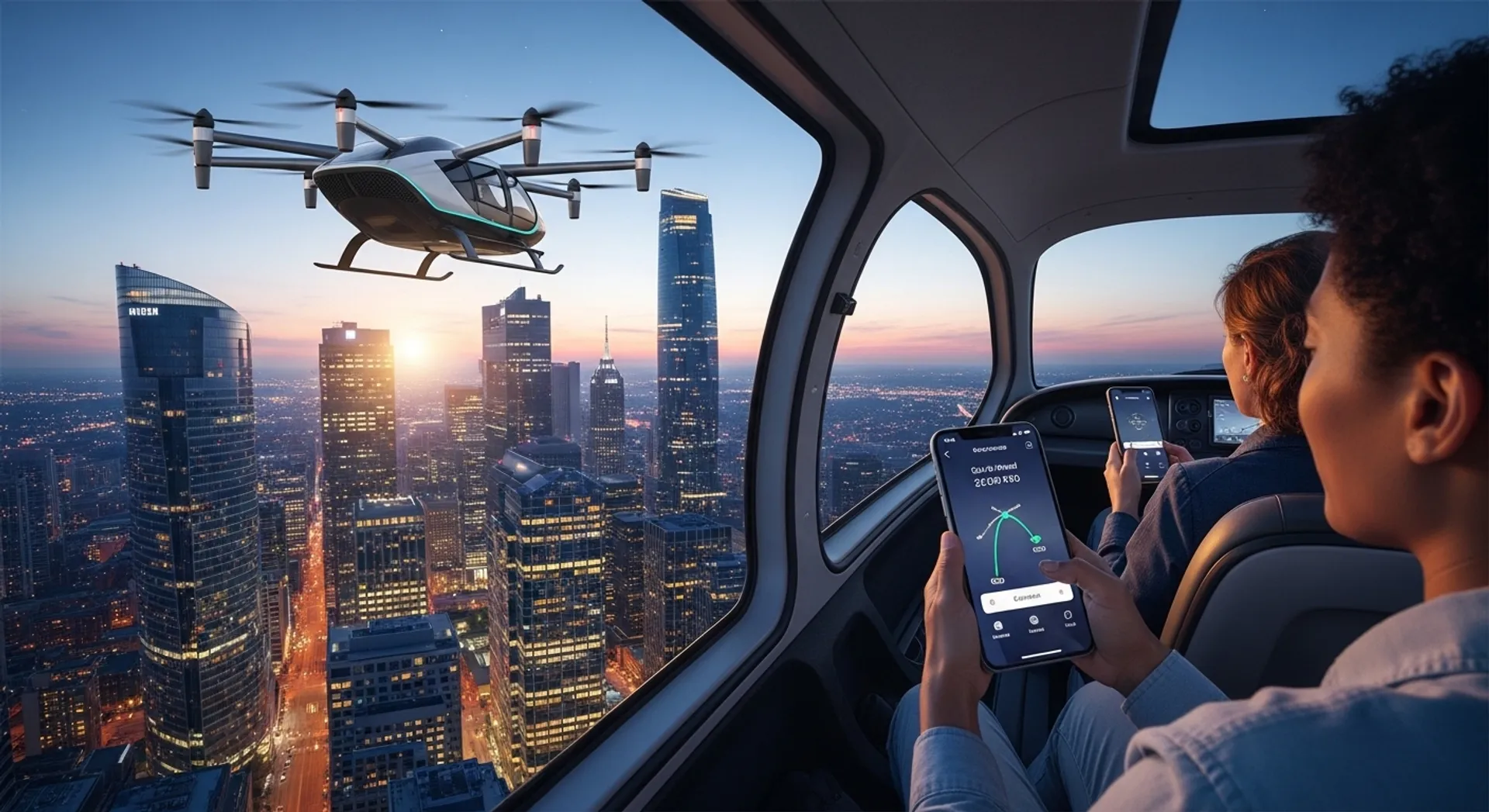
Uber and Joby are building a system that connects ground transportation with short-distance electric air travel. The model is not just “open app, fly.” It is designed as a linked journey. A rider enters a destination in the Uber app, and if the route qualifies, Uber Air powered by Joby appears as an option. The app then books the full trip, including the car ride to the vertiport, the air taxi segment, and the car connection on the other end.
That is a much smarter approach than treating air taxis like a separate luxury service. Most people do not think in terms of transport modes. They think in terms of getting from point A to point B with the least friction possible. Uber understands that. If air taxis are going to work, they have to feel like part of a normal trip plan, not like a detached aviation product for hobbyists and tech fans.
Why the app integration matters more than the aircraft hype
Joby’s aircraft matters, of course. It is an all-electric vertical takeoff and landing aircraft designed to carry a pilot and four passengers, fly at speeds of up to 200 miles per hour, and cover about 100 miles on a charge. But the more important consumer story is the booking experience. If Uber can hide the complexity and make the journey feel simple, that is what gives the idea a chance to scale.
People adopt easy systems, not technical demonstrations
This is where many transportation technologies get exposed. The engineering may be strong, but the customer journey feels awkward. Extra steps kill mass adoption. Uber’s real advantage is not that it can build aircraft. It is that it already owns a behavior: opening an app when you need to go somewhere.
That behavior gives Uber a real edge
Joby brings the aircraft and operational expertise. Uber brings the interface people already trust for on-demand transport. That combination is why this story matters more than a typical aviation announcement.
Why Dubai is first
Dubai is the right launch market for Uber Joby air taxi service because it combines visibility, infrastructure ambition, supportive government alignment, and a willingness to introduce high-profile transportation technology faster than many Western cities. That does not guarantee success, but it makes Dubai a practical first market.
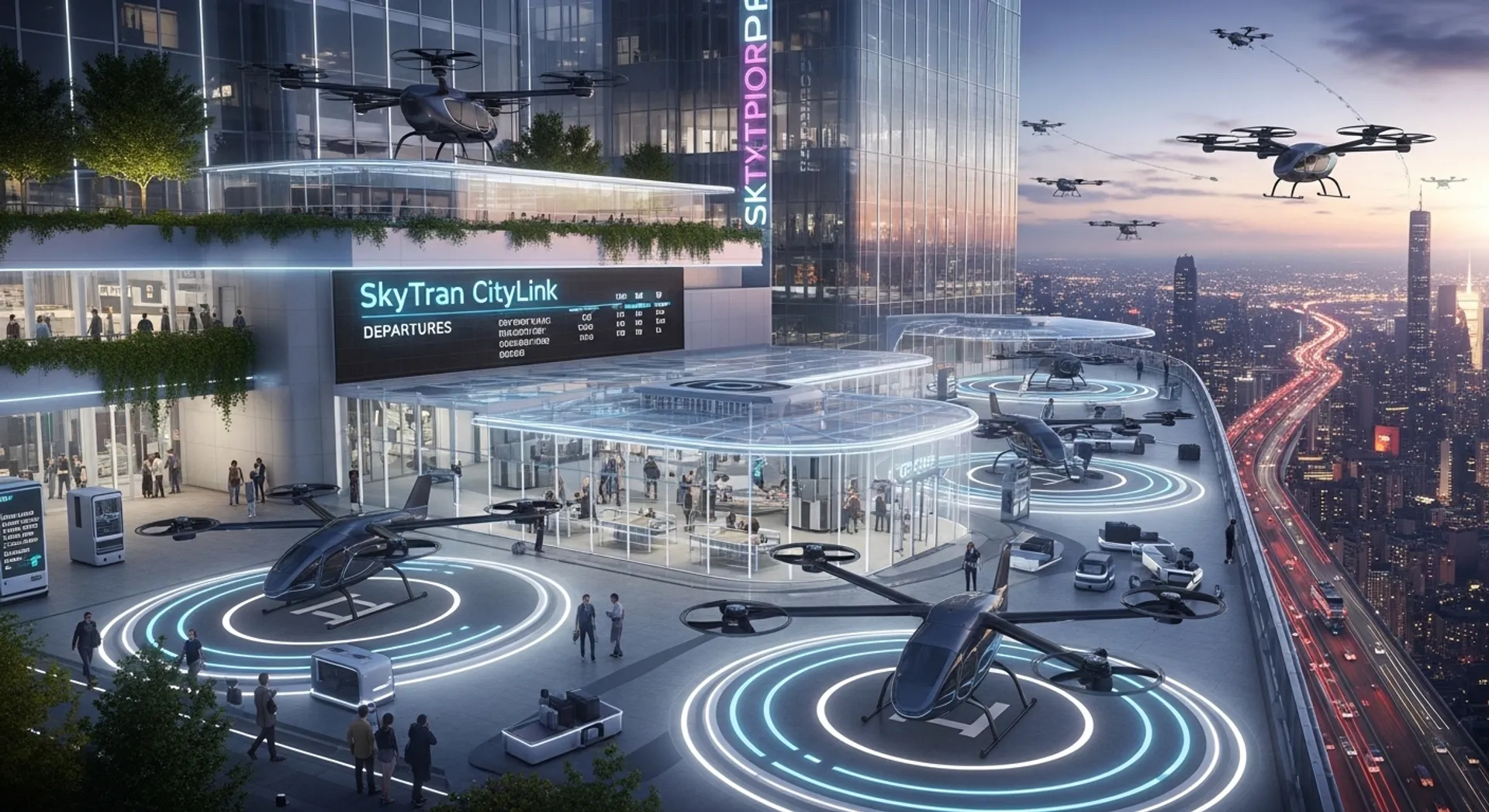
Joby already has a six-year exclusive right to operate air taxis in Dubai, and the launch network has been built around major anchor points. Those planned nodes include Dubai International Airport, Palm Jumeirah, Dubai Marina, and Dubai Downtown, while later public product materials also highlight key destinations such as Dubai Mall, Atlantis The Royal, and the American University in Dubai. That gives the rollout something crucial: a clear use case tied to tourism, airport transfers, premium time savings, and high-visibility urban corridors.
Why early air taxi service will focus on selective routes
Air taxi service is not going to replace ordinary rides across an entire city from day one. It works best first on routes where the value is obvious. Airport to high-end hotel. Major business district to major residential zone. Tourist corridor to tourist corridor. These are the trips where people feel the pain of traffic most clearly and can understand why a premium aerial option might make sense.
Time savings are the strongest early selling point
Joby has said that a trip from Dubai International Airport to Palm Jumeirah could take about 10 minutes by air instead of roughly 45 minutes by car. Whether those exact numbers hold consistently in real operations, the consumer message is clear: air taxis are being sold as time-saving city transport, not just futuristic sightseeing.
That is what makes the product commercially interesting
People will not regularly pay for a novelty. They may pay for speed, convenience, and a smoother airport-to-destination journey if the math feels reasonable.
How close is the actual launch?
This is where the honest answer matters. The Uber Joby air taxi product is close enough that you can now describe how it will work in real consumer terms. That alone is a huge shift from where the sector stood a few years ago. But it is still early enough that broad rollout should not be mistaken for immediate reality.
Dubai is expected to be the first market later in 2026, and Joby has said it expects to carry its first passengers there this year. That is meaningful progress. At the same time, wider commercial deployment still depends on operating approvals, infrastructure readiness, and the ability to execute safely in a tightly regulated environment. In the United States, the biggest gate is still certification. Joby has started flying its first FAA-conforming production aircraft and says it is in the final certification stage, but final certification is not a formality. It is the barrier between a promising service and a scalable one.
Closer than it sounds, but not yet routine
The best way to phrase it is this: Uber Joby air taxi service is closer than most people think in product design, partnership structure, and launch preparation. But it is not yet close in the sense of becoming ordinary everyday mobility for the average rider in most cities. Those are two different standards, and people often mix them up.
What feels close right now
The app flow feels close. The route logic feels close. The first-city plan feels close. The aircraft testing and public demonstrations feel close. Even the pricing narrative feels more grounded than many expected, since Uber has said the service will show upfront pricing and media reporting says the aerial leg is being positioned around Uber Black-level economics rather than absurd ultra-luxury pricing.
What still keeps it from feeling mainstream
Mainstream transport requires repetition, reliability, regulatory consistency, and enough infrastructure that riders stop thinking of it as special. Air taxis are not there yet. Not even close.
What riders should realistically expect

Riders should expect a premium, limited, city-specific service first. Early adopters are likely to be airport travelers, business travelers, tourists, and high-income users who value speed enough to pay for it. The service may feel seamless in the app, but it will still be operationally selective. Not every route will qualify. Not every city will get it soon. Not every rider will care.
That does not weaken the concept. It simply keeps expectations honest. The first wave of air taxi demand is likely to come from people already comfortable paying more to save time. If the service proves safe, smooth, and reliable, the long-term question becomes whether pricing can move down over time and whether city coverage can expand enough to feel less exclusive.
Will this replace normal Uber rides?
No. Not in any near-term sense. Uber Joby air taxi service is an added layer, not a replacement for everyday rideshare. Most urban trips are still too ordinary, too short, too price-sensitive, or too geographically messy to justify an air segment. Ground transport remains the core business.
But it can still reshape expectations
Even if air taxis stay selective for a while, they can still change how people think about transportation platforms. Uber is trying to become the place where multiple mobility layers live inside one interface. Car, robotaxi, premium car, and now air connection. That platform logic is the bigger story.
And that matters for the future of rideshare
The more Uber succeeds at bundling transport types into one trip-planning system, the more it changes the meaning of rideshare from “car on demand” to “mobility on demand.”
What drivers and the wider industry should watch
Drivers do not need to panic about air taxis replacing normal rides. That is not the near-term story. But they should pay attention to what this signals about Uber’s strategy. The company is building outward into higher-value, more tech-enabled transport layers while keeping everything inside the same customer relationship. That is a long-term platform move, not a one-off experiment.
The industry should also watch the city-by-city pattern. Dubai may be first because it is unusually launch-friendly, but the longer-term targets matter too. Uber and Joby have pointed to markets including New York, Los Angeles, the United Kingdom, and Japan. Joby is also participating in selected U.S. eVTOL integration programs. That suggests the companies are thinking far beyond a single showcase city.
Why air taxis matter even before they scale
New transport products do not need mass adoption on day one to influence the market. They only need to prove that a working model exists. Once that happens, regulators, competitors, investors, airports, and infrastructure providers start planning around a future that feels more concrete.
That is the stage this market is entering now
Air taxis are moving out of pure concept territory. They are entering the phase where operational proof starts to matter more than slide decks and promotional videos.
And that is why 2026 matters
If Dubai launches successfully and Joby continues certification progress in the U.S., 2026 could be remembered as the year air taxis stopped sounding ridiculous and started sounding plausible.
Final thoughts
So, is Uber Joby air taxi travel closer than it sounds? Yes, but only if you define “closer” correctly. It is closer in the sense that we now know the first market, the app experience, the launch structure, the route logic, and the operating concept. It is closer in the sense that the product now looks like a real service instead of an abstract vision.
But it is not close in the sense of everyday ubiquity. Certification still matters. Infrastructure still matters. City partnerships still matter. Pricing still matters. And public trust still matters. That is the truth. Air taxis are no longer fantasy, but they are not routine transportation yet either. They are now in the zone that matters most: believable, visible, and close enough that the next major step could change the conversation fast.
For Uber’s official overview of how the service is expected to work, see Uber’s Uber Air powered by Joby announcement.